
A Shift, Not An Ending
Retirement isn’t one emotion—it’s a mix. At first, it felt odd. The routine that had shaped my life for decades was suddenly gone. I wasn’t expected anywhere; there were no meetings, no performance reviews, and no calendar blocks. That part was disorienting. But it was also freeing. There was space to think, to breathe. I just had to remind myself this was a transition, not a void.
When Work Is Who You Are
If you’ve spent your career building, leading, and embracing an organization, your job becomes part of your identity. That was true for me. When I retired from Corning, it was more than leaving a role. I was stepping away from something that had shaped how I saw myself. I wasn’t part of that inner circle anymore, that daily rhythm and shared purpose. And that shift, that loss of identity, was real.
Redefining Work
I wasn’t interested in a 100% retirement. I wanted to stay active, and I knew that without a plan, I could easily drift back into full-time work. What I was looking for was 50/50: something meaningful where I could contribute, but still have time for my amazing wife, time for the horse property, time for long walks with the dogs, and time on the lake.
I found a balance by weaving together a range of fulfilling activities. First, I became a business advisor to a company doing impactful work in the lithium battery space. Their technology makes batteries 20–30% more efficient, which, in our world, is a game-changer.
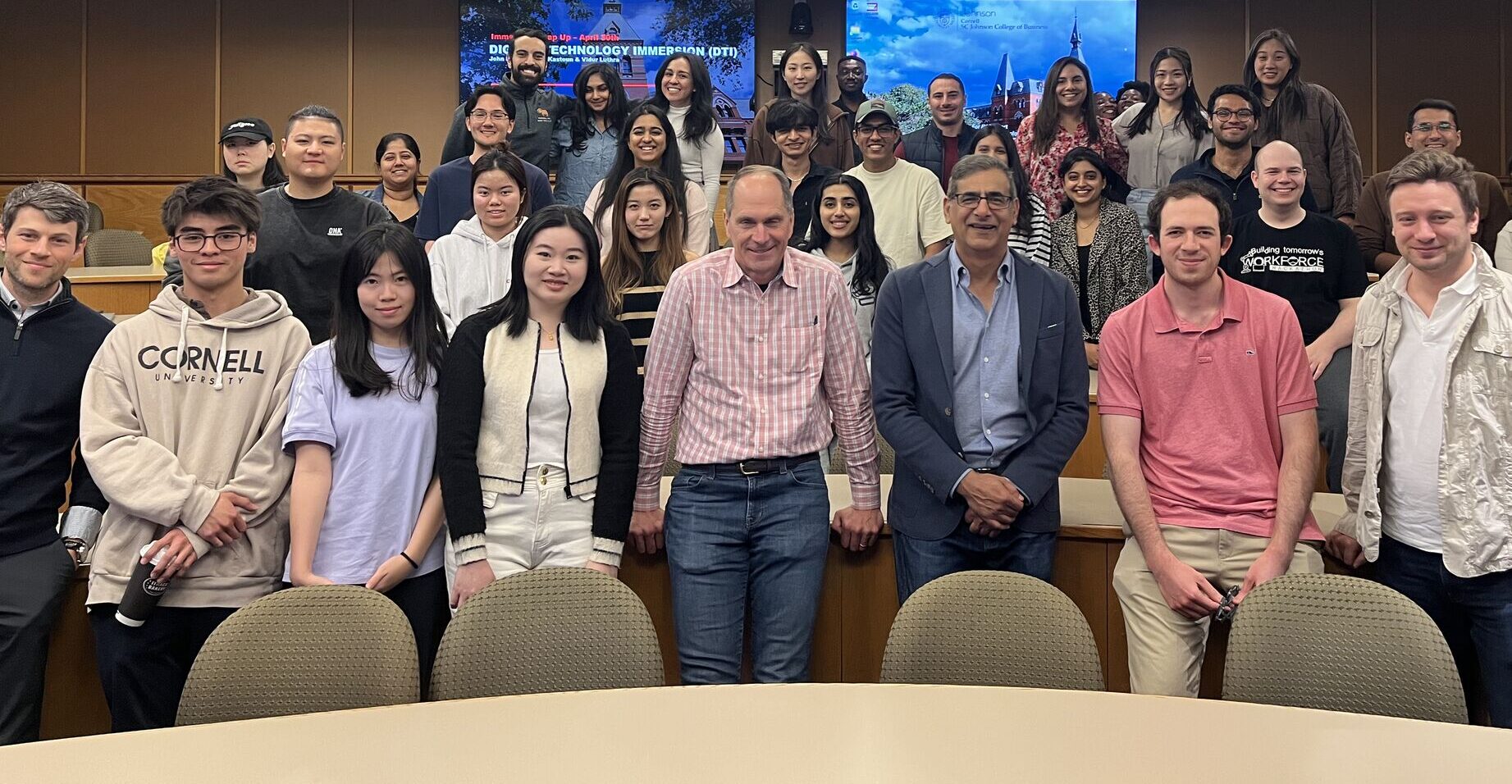
Second, I serve on three boards: NS Nanotech (private), Guthrie Healthcare System, and the FoodBank of the Southern Tier. I also teach at Cornell University Business School. Each role offers a different kind of satisfaction, and combined, they create a rhythm that works for this stage of my life.
From the Lecture Hall to the Horse Farm
Teaching has opened my eyes. These students are digital natives. They don’t just use tech—they think in it. They care about learning, but it’s more about experience than accolades. Earlier this year, while introducing myself to my Cornell business class, I mentioned that my wife and I run a small horse farm outside Ithaca, New York. I said, half-jokingly, “If any of you want to meet the horses, you’re welcome to visit.” I didn’t expect anyone to take me up on it.
But one student did. And he brought four friends. They came out, met the horses, saw the bison on the farm next door, played with the dogs, rode the ATVs, and just unplugged. One student said, “This was the best day ever!” Later, another student sent me an email saying, “This is the kind of life I hope to have one day.”
That stuck with me. Because no matter what season of life you’re in, sharing something real and grounded can leave a bigger mark than you think.
It Has to Matter
What ties all these commitments together is a simple filter—it has to matter. Whether it’s teaching, board service, or strategic advising, I want to be part of something where I believe in the why and know I can make a difference. That clarity has been a gift. It encourages me to say no to things that may sound impressive externally but don’t feel meaningful internally. If I’m going to give my time, I want it to count.
I use this pie chart framework when I talk to students about defining what matters to them. I tell them, “Early on, your whole chart might be money. That’s fine. Then life happens.” You get married, have kids, want a little free time, and maybe a hobby or two. Suddenly, that money slice gets smaller. The point is, everyone’s chart looks different, and it keeps changing as you move through different seasons of life. What matters is that you define it for yourself as you go through different stages and try to live in a way that matches your values. Not your boss’s version, not your neighbor’s, not social media’s. Yours. This is how you find fulfillment and happiness.
Look Ahead
You can’t live in the past. You had your run. Now the question is, what’s next? You get to decide what this new chapter looks like. Don’t copy someone else’s version. Don’t do something because it looks good on LinkedIn. Build a season that fits you—your values, your energy, your priorities.
Also, always have something to look forward to. It could be a concert or a vacation. Just have something on the horizon.
What Comes Next?
For now, I’m doing work that keeps me engaged, helping people and organizations I care about. But I can see a day down the road when I throttle back even more, especially if grandkids enter the picture.
We’ve got three horses, two dogs, and two cats, and it’s a full-time job keeping up with all of them. We don’t have outside help—we do it all ourselves. And truthfully, I wouldn’t have it any other way.
I’m never happier than on a Saturday morning with a task list that involves the chainsaw, the ATV, or the tractor. What some people see as chores, I see as joy. We’ve got land to manage, animals to care for, and plenty of trails left to walk. That’s more than enough.